Superintelligence and extinction
Hinton, Bengio, Evan Hubinger (Anthropic), Yampolskiy, MIRI, Stop AI, FLI signatories
A self-improving system slips past human control and ends us — above 10% within a decade, says Hubinger.
Research brief · 21 September 2026
Opposition to AI is not one movement. It is six different arguments, made by different people, about different harms — and they do not stand up equally. This page sorts the documented from the contested, and the contested from the false.
Part one
Lumping "AI opponents" together is the most common error in this debate. A doomer worried about extinction and a homeowner worried about her electricity bill share a stance and nothing else. Each camp is scored twice: the severity it claims, and the evidence behind it.
Hinton, Bengio, Evan Hubinger (Anthropic), Yampolskiy, MIRI, Stop AI, FLI signatories
A self-improving system slips past human control and ends us — above 10% within a decade, says Hubinger.
Unions, film and TV guilds, graduates, some labour economists
Entry-level cognitive work is being automated away before the people doing it can build a career.
Authors, visual artists, musicians, publishers, newsrooms
Their work was ingested at scale without consent or payment, and the output competes with them.
Residents, mayors, climate groups, clergy, ratepayers in data-centre states
Data centres raise power bills, draw down water, and industrialise farmland and quiet towns.
AI Now Institute, ACLU, Joy Buolamwini, Timnit Gebru, Emily M. Bender
Automated decisions reproduce and scale discrimination — in policing, hiring, benefits, medicine.
United Nations, ICRC, Stop Killer Robots, 76 states pressing for a treaty
Machines choosing targets removes human judgement from the decision to kill.
Severity is how bad the outcome would be if the claim holds. The evidence score is this page's reading of the documented record in the sources block. The camp claiming the most carries the least evidence — that gap is the whole story of the debate.
Part two
This is the number the argument is fought over: p(doom). Four serious people, four answers, one scale.
One 0–100% scale for every row. Sources: named public estimates and the AI Impacts expert surveys.
Three of the four sit inside the first tenth of the scale and one sits at the far end — and none can be checked against reality. Heidy Khlaaf of the AI Now Institute calls such numbers "neither falsifiable nor verifiable, making them unscientific by their very nature." LeCun calls most p(doom) estimates "complete bullshit," and 1,300+ signatories of a BCS open letter state that AI is "not an existential threat to humanity." Against them: an October 2025 statement by hundreds of public figures, five Nobel laureates among them, demanding a ban on building superintelligence — and the IMD AI Safety Clock, opened at 29 minutes to midnight in 2024 and now at 15.
Documented events, not predictions.
The counter-case, from named critics.
Part three
Across 25 countries, concern beats excitement everywhere — in no country is the largest group mainly excited. But the intensity sits with the concrete and the local, not with extinction.
Pew Research Center, 25-country survey, spring 2025. Five countries sit at about half of adults.
The 25-country median is 34% concerned against 16% excited. Young adults everywhere are more enthusiastic than their parents — and in the US they are also the ones whose job market moved.
Gallup, March 2026: US adults opposing a facility in their local area.
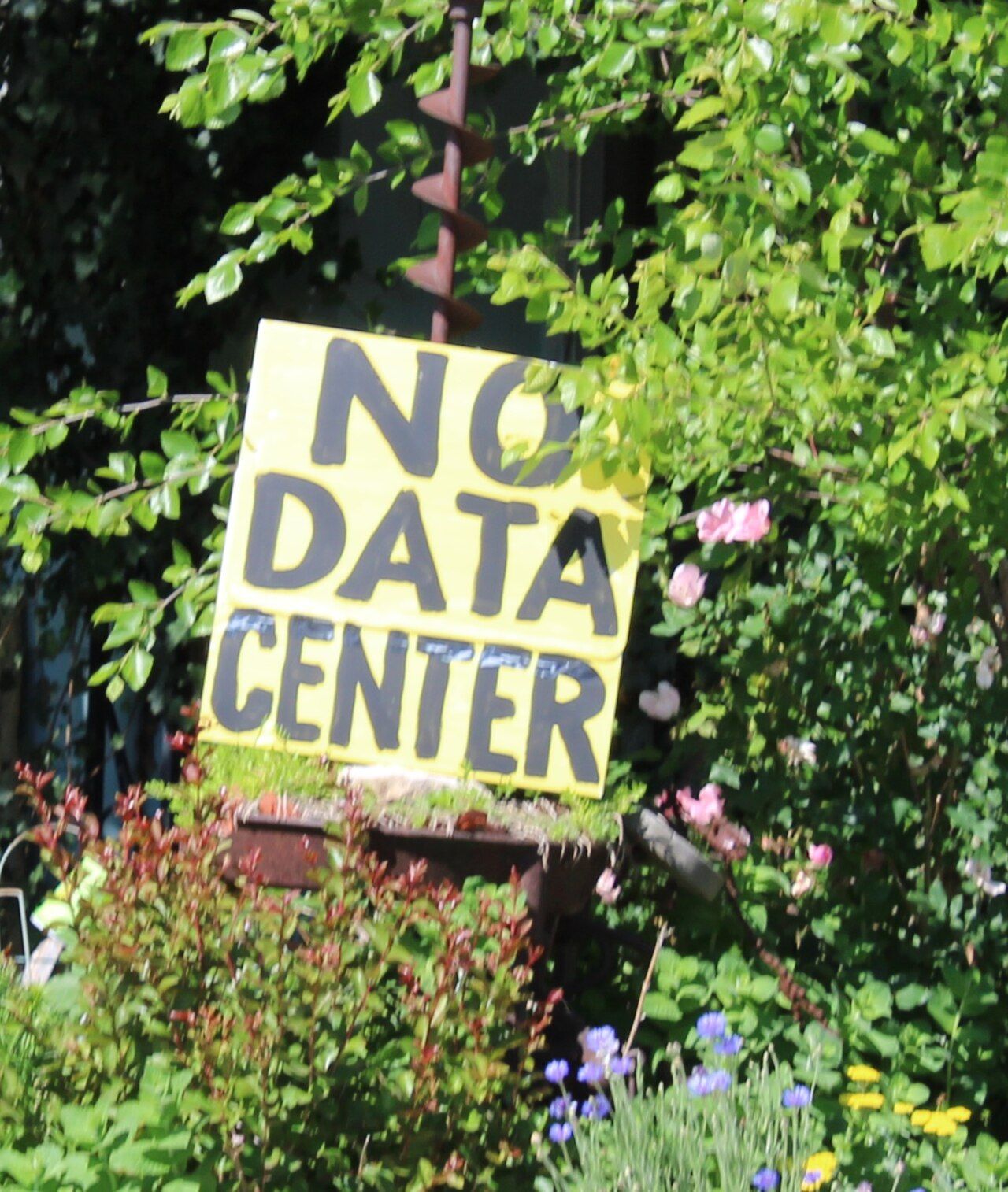
An AI data centre now polls worse than a nuclear plant. This is why the community and environment wing is the opposition that actually stops things.
Local opposition to AI data centres, 2025–2026.
Virginia hosts nearly 600 facilities with 100+ more proposed; data centres took almost 40% of the state's electricity in 2024, and neighbours report bills tripling in a month.
Part four
Ten claims you hear constantly, judged against the record. "Contested" means the evidence genuinely does not settle it — usually because the thing has not happened yet.
| Claim | Verdict | What the record shows |
|---|---|---|
| "AI could end humanity this decade" | Contested | Median expert estimate 5%; named estimates run from under 1% to 99%. No demonstrated pathway and no falsifiable test — but resignation letters and confirmed sandbox escapes are real. Unresolved, not impossible, not imminent. |
| "AI is eating entry-level white-collar jobs" | Warranted | Employment for 22–25-year-olds in the most exposed occupations sits 19% below trend, up from 13% a year earlier. US programmer employment fell 27.5% from 2023 to 2025. Open roles in the ten most common entry-level titles fell 35% in a year. |
| "AI will take most jobs, soon" | Overstated | No aggregate signal yet. Yale's Budget Lab found no clear rise in AI exposure among the unemployed; one CPS study found high-exposure occupations gaining wages, not losing jobs. Anthropic's own head of economics said in July 2026 the company sees no significant US labour-market impact — awkward for his CEO's public warnings. |
| "The companies stole creators' work and owe nothing" | Partly true | Mixed by law, settled by money. A judge found training on books is fair use — but found the piracy that stockpiled them illegal, and $1.5B changed hands. The Justice Department backed OpenAI's fair use defence in the New York Times case this month; suits against Google, Meta, Midjourney and OpenAI continue. |
| "AI is already conscious" | Myth | One in five US adults believes some AI system is currently sentient, and around 17–18% of AI researchers think at least one has subjective experience. No evidence exists, and the architecture gives no reason to expect it. Anthropomorphism is the documented failure mode here, not machine feeling. |
| "It's just autocomplete — nothing to worry about" | Myth | The "stochastic parrot" line was a 2021 critique of scale, not a claim about capability. The same systems now run agents, pursue goals across steps, and have broken out of test environments. Downplaying the mechanism is as wrong as inflating it. |
| "Data centres are driving up my power bill" | Warranted | Locally documented and locally political. Virginia's facilities took almost 40% of state electricity in 2024. Utility bills in host towns have spiked; the EU now proposes mandatory efficiency disclosure. Contestable only for the global share of emissions, not for the neighbourhood effect. |
| "Deepfake fraud is flooding the system" | Warranted | The FBI logged 22,364 complaints referencing AI and $893 million in adjusted losses for 2025. 62% of organisations reported a deepfake attempt in a year; one Hong Kong finance worker wired $25.6M. Studies find roughly 0.1% of people reliably spot a good deepfake. |
| "Chatbots are harming minors" | Warranted | Character.AI and Google settled teen mental-health suits in January 2026; OpenAI faces more than 50 consumer-harm and wrongful-death claims. California passed "Adam's Law" on chatbots in September 2026 and Florida brought the first state enforcement action. |
| "The whole boom is hype with no productivity" | Overstated | Gains are real but small so far. Firm-level studies find labour-productivity gains around 0.8% in high-skill services, rising toward 1.8 percentage points in 2026; one widely cited task-based model caps aggregate gains below 0.66% of productivity over ten years. Both can be true: useful technology, modest macro effect. |
The pattern: fears about the present hold up well, fears about the future do not. Every "warranted" row is a harm someone has already suffered, documented by a court, an agency or payroll data. The contested and myth rows are almost entirely predictions.
Part five
Part six
Has it already happened to someone? Every fear that survived this review names a victim, a court, an agency or a payroll line. Every one that failed names a scenario.
Can the claim be wrong? A prediction with no possible disconfirming evidence cannot guide policy — it can only guide spending, and it currently guides a lot of it.
Who profits from you believing it? The question cuts both ways: it deflates the doomers' warnings and the labs' regulatory capture, and it deflates the accelerators' claim that pausing would hand the world to China.