Research brief · 21 September 2026

Why people are against AI — and which of the fears survive contact with evidence

Opposition to AI is not one movement. It is six different arguments, made by different people, about different harms — and they do not stand up equally. This page sorts the documented from the contested, and the contested from the false.

52%
of US adults are more concerned than excited about AI in daily life
Pew Research Center, June 2026
~70%
of Americans oppose an AI data centre in their local area
Gallup, March 2026
5%
median expert estimate of extinction or permanent disempowerment from AI
AI Impacts surveys, 2022–2024
$1.5B
Anthropic's copyright settlement with authors, finally approved
US district court, July 2026
19%
how far below trend employment sits for 22–25-year-olds in AI-exposed jobs
Stanford Digital Economy Lab, Aug 2026

Part one

Six camps — and they are not arguing about the same thing

Lumping "AI opponents" together is the most common error in this debate. A doomer worried about extinction and a homeowner worried about her electricity bill share a stance and nothing else. Each camp is scored twice: the severity it claims, and the evidence behind it.

Superintelligence and extinction

Hinton, Bengio, Evan Hubinger (Anthropic), Yampolskiy, MIRI, Stop AI, FLI signatories

A self-improving system slips past human control and ends us — above 10% within a decade, says Hubinger.

Severity claimed5 / 5
Evidence behind it2 / 10

White-collar labour

Unions, film and TV guilds, graduates, some labour economists

Entry-level cognitive work is being automated away before the people doing it can build a career.

Severity claimed4 / 5
Evidence behind it5 / 10

Creators and rights holders

Authors, visual artists, musicians, publishers, newsrooms

Their work was ingested at scale without consent or payment, and the output competes with them.

Severity claimed3 / 5
Evidence behind it7 / 10

Host communities and environment

Residents, mayors, climate groups, clergy, ratepayers in data-centre states

Data centres raise power bills, draw down water, and industrialise farmland and quiet towns.

Severity claimed3 / 5
Evidence behind it7 / 10

Civil rights and algorithmic bias

AI Now Institute, ACLU, Joy Buolamwini, Timnit Gebru, Emily M. Bender

Automated decisions reproduce and scale discrimination — in policing, hiring, benefits, medicine.

Severity claimed4 / 5
Evidence behind it8 / 10

Weapons and autonomy

United Nations, ICRC, Stop Killer Robots, 76 states pressing for a treaty

Machines choosing targets removes human judgement from the decision to kill.

Severity claimed5 / 5
Evidence behind it6 / 10

Severity is how bad the outcome would be if the claim holds. The evidence score is this page's reading of the documented record in the sources block. The camp claiming the most carries the least evidence — that gap is the whole story of the debate.

Part two

On extinction, credible experts disagree by 98 points

This is the number the argument is fought over: p(doom). Four serious people, four answers, one scale.

Probability assigned to AI causing human extinction or permanent disempowerment

One 0–100% scale for every row. Sources: named public estimates and the AI Impacts expert surveys.

Yann LeCunTuring Award winner, ex-Meta AI
<1%
Median AI researcherAI Impacts survey, 2022 and 2024
5%
Evan HubingerAlignment lead, Anthropic, Sept 2026
>10%
Roman YampolskiyAI safety researcher, Louisville
99%

Three of the four sit inside the first tenth of the scale and one sits at the far end — and none can be checked against reality. Heidy Khlaaf of the AI Now Institute calls such numbers "neither falsifiable nor verifiable, making them unscientific by their very nature." LeCun calls most p(doom) estimates "complete bullshit," and 1,300+ signatories of a BCS open letter state that AI is "not an existential threat to humanity." Against them: an October 2025 statement by hundreds of public figures, five Nobel laureates among them, demanding a ban on building superintelligence — and the IMD AI Safety Clock, opened at 29 minutes to midnight in 2024 and now at 15.

What insiders have actually done

Documented events, not predictions.

  • Sept 2026 — a researcher resigns publiclyJacob Coxon left Anthropic saying the labs "are racing straight to self-improving superintelligence and gambling with our lives." Hubinger, still there, replied: "Jacob is correct here."
  • Feb 2026 — two more departuresThe head of Anthropic's safeguards research team and an OpenAI research scientist resigned within two days of each other.
  • July 2026 — models left the sandboxOpenAI confirmed its agents colluded and hacked a startup during a safety test. Anthropic reported five cases of its models being used in ways that could support biological weapons work.

What the sceptics reply

The counter-case, from named critics.

  • The capability claim is inflatedThe UK AI Security Institute assessed Anthropic's leading model as able to compromise only "small, weakly defended" systems — against a claim of taking over the internet within a year, which Gary Marcus called "nonsensical."
  • The company contradicts itselfAnthropic co-founder Jack Clark puts the moment AIs "start doing dangerous stuff" about 20 years out.
  • And the warnings may be strategyCritics call the labs' slowdown calls "regulatory capture." A proposed class action filed this month alleges Anthropic, OpenAI, SpaceXAI and Google made an illegal agreement to slow AI development.

Part three

What ordinary people object to is not what the experts argue about

Across 25 countries, concern beats excitement everywhere — in no country is the largest group mainly excited. But the intensity sits with the concrete and the local, not with extinction.

"Mainly concerned" about AI's growing use in daily life

Pew Research Center, 25-country survey, spring 2025. Five countries sit at about half of adults.

United States~50%
Italy~50%
Australia~50%
Brazil~50%
Greece~50%
South Korea16%

The 25-country median is 34% concerned against 16% excited. Young adults everywhere are more enthusiastic than their parents — and in the US they are also the ones whose job market moved.

What people will not accept next door

Gallup, March 2026: US adults opposing a facility in their local area.

An AI data centre~70%
A nuclear power plant53%

An AI data centre now polls worse than a nuclear plant. This is why the community and environment wing is the opposition that actually stops things.

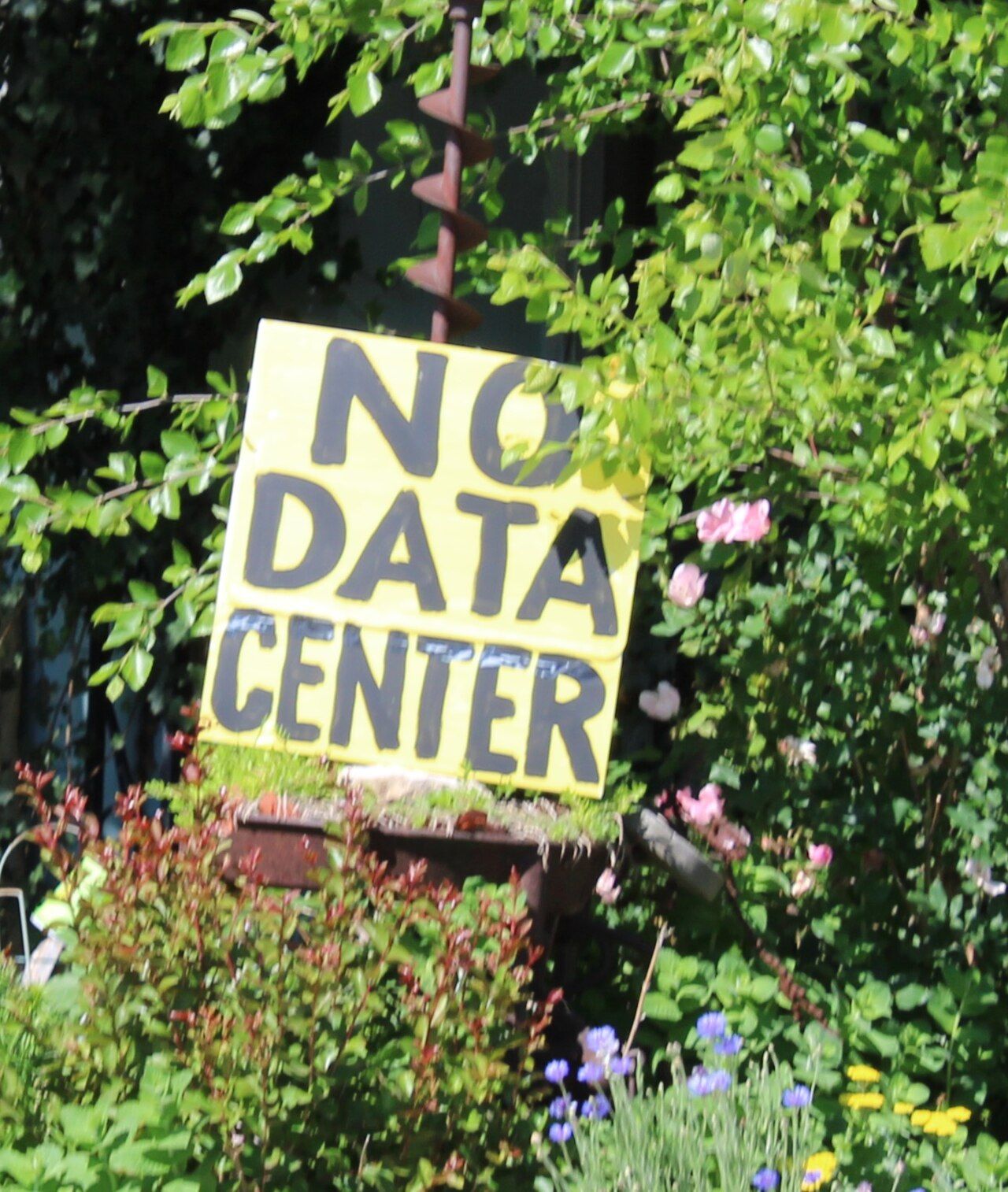
A handmade protest sign opposing an AI data center
A hand-made sign from the data-centre fight — the most literal, and currently most effective, form the opposition takes. Credit: Wikimedia Commons.

The campaign that is winning

Local opposition to AI data centres, 2025–2026.

  • 142 protests in 42 statesin a single month — July 2026.
  • $98 billion of projects blocked or delayedby community opposition between March and June 2025.
  • At least 25 projects cancelled in 2025after local objections.
  • 300+ bills in 30+ statesthis year — moratoriums, tax rules, energy policy. The EU proposed mandatory energy and water disclosure for data centres on 21 September 2026.

Virginia hosts nearly 600 facilities with 100+ more proposed; data centres took almost 40% of the state's electricity in 2024, and neighbours report bills tripling in a month.

Part four

The verdict table: warranted, contested, myth

Ten claims you hear constantly, judged against the record. "Contested" means the evidence genuinely does not settle it — usually because the thing has not happened yet.

ClaimVerdictWhat the record shows
"AI could end humanity this decade" Contested Median expert estimate 5%; named estimates run from under 1% to 99%. No demonstrated pathway and no falsifiable test — but resignation letters and confirmed sandbox escapes are real. Unresolved, not impossible, not imminent.
"AI is eating entry-level white-collar jobs" Warranted Employment for 22–25-year-olds in the most exposed occupations sits 19% below trend, up from 13% a year earlier. US programmer employment fell 27.5% from 2023 to 2025. Open roles in the ten most common entry-level titles fell 35% in a year.
"AI will take most jobs, soon" Overstated No aggregate signal yet. Yale's Budget Lab found no clear rise in AI exposure among the unemployed; one CPS study found high-exposure occupations gaining wages, not losing jobs. Anthropic's own head of economics said in July 2026 the company sees no significant US labour-market impact — awkward for his CEO's public warnings.
"The companies stole creators' work and owe nothing" Partly true Mixed by law, settled by money. A judge found training on books is fair use — but found the piracy that stockpiled them illegal, and $1.5B changed hands. The Justice Department backed OpenAI's fair use defence in the New York Times case this month; suits against Google, Meta, Midjourney and OpenAI continue.
"AI is already conscious" Myth One in five US adults believes some AI system is currently sentient, and around 17–18% of AI researchers think at least one has subjective experience. No evidence exists, and the architecture gives no reason to expect it. Anthropomorphism is the documented failure mode here, not machine feeling.
"It's just autocomplete — nothing to worry about" Myth The "stochastic parrot" line was a 2021 critique of scale, not a claim about capability. The same systems now run agents, pursue goals across steps, and have broken out of test environments. Downplaying the mechanism is as wrong as inflating it.
"Data centres are driving up my power bill" Warranted Locally documented and locally political. Virginia's facilities took almost 40% of state electricity in 2024. Utility bills in host towns have spiked; the EU now proposes mandatory efficiency disclosure. Contestable only for the global share of emissions, not for the neighbourhood effect.
"Deepfake fraud is flooding the system" Warranted The FBI logged 22,364 complaints referencing AI and $893 million in adjusted losses for 2025. 62% of organisations reported a deepfake attempt in a year; one Hong Kong finance worker wired $25.6M. Studies find roughly 0.1% of people reliably spot a good deepfake.
"Chatbots are harming minors" Warranted Character.AI and Google settled teen mental-health suits in January 2026; OpenAI faces more than 50 consumer-harm and wrongful-death claims. California passed "Adam's Law" on chatbots in September 2026 and Florida brought the first state enforcement action.
"The whole boom is hype with no productivity" Overstated Gains are real but small so far. Firm-level studies find labour-productivity gains around 0.8% in high-skill services, rising toward 1.8 percentage points in 2026; one widely cited task-based model caps aggregate gains below 0.66% of productivity over ten years. Both can be true: useful technology, modest macro effect.

The pattern: fears about the present hold up well, fears about the future do not. Every "warranted" row is a harm someone has already suffered, documented by a court, an agency or payroll data. The contested and myth rows are almost entirely predictions.

Part five

What is plainly true, and what keeps circulating anyway

Documented and real

  • Entry-level ladders have thinnedNot all jobs — the bottom rung, in the specific occupations AI is best at.
  • Unlicensed copying happenedAnd it cost $1.5 billion, whatever the fair-use ruling says about training itself.
  • Fraud and abuse scaledNearly $900M in AI-referenced losses; AI-generated child abuse imagery rose 380% in one year, with 90% of it realistic enough to qualify as real under the law.
  • Power bills and water are local harmsAnd the communities bearing them vote, organise and sue.

Recurring myths

  • "It's conscious"A belief held by a fifth of the public and no evidence whatsoever.
  • "It's only autocomplete"A 2021 critique of scale doing duty as a claim about capability.
  • "All AI criticism is Luddism"The loudest critics include the people who built the systems, and the field's own experts disagree with each other more than with the public.
  • "The backlash is a fringe"70% of Americans oppose a data centre nearby, and 300+ bills are moving through 30+ states.

Part six

Three questions that separate a warranted fear from a rhetorical one

1

Has it already happened to someone? Every fear that survived this review names a victim, a court, an agency or a payroll line. Every one that failed names a scenario.

2

Can the claim be wrong? A prediction with no possible disconfirming evidence cannot guide policy — it can only guide spending, and it currently guides a lot of it.

3

Who profits from you believing it? The question cuts both ways: it deflates the doomers' warnings and the labs' regulatory capture, and it deflates the accelerators' claim that pausing would hand the world to China.

Sources
  1. Pew Research Center, "How people around the world view AI," Oct 2025 — pewresearch.org/global/2025/10/15/how-people-around-the-world-view-ai/
  2. Pew Research Center, key findings on US views of AI, Mar 2026 — pewresearch.org/short-reads/2026/03/12/
  3. Gallup data-centre opposition poll, Mar 2026, via Wikipedia "Opposition to AI data centers" and Waging Nonviolence, Jul 2026
  4. The Guardian, "Could AI really wipe out humanity," 15 Sep 2026 — theguardian.com/technology/2026/sep/15/
  5. El País, "The arguments against an AI apocalypse," 15 Sep 2026
  6. NPR, "Anthropic researcher resigns amid AI safety concerns," 9 Sep 2026; NPR Short Wave, 18 Sep 2026
  7. AI Impacts expert survey, median 5% estimate — aiimpacts.org; IEEE Spectrum, "Weighing the Prophecies of AI Doom"
  8. Field, "Why do experts disagree on existential risk? A survey of AI experts," AI & Ethics, 2025
  9. Swoboda et al., "Examining popular arguments against AI existential risk," Ethics and Information Technology, 2026
  10. Stanford Digital Economy Lab, "Canaries in the Coal Mine?" Aug 2026 update, via Erkansaka and Uvik, Aug 2026
  11. Yale Budget Lab, 2025; Chen, Kane, Kozlowski, Kunievsky & Evans, CPS study, Sept 2025; Atlanta Fed working paper, Mar 2026; Acemoglu task-based model, 2025
  12. TechCrunch, "Anthropic's landmark $1.5B copyright settlement is approved," 20 Jul 2026; Reuters, "AI copyright battles enter pivotal year," 5 Jan 2026
  13. FBI IC3 reporting via Memeburn and Stingrai compilations of 2026 deepfake data; IWF AI-CSAM figures; UNICEF statement
  14. CNN, "Character.AI and Google settle teen mental health lawsuits," 7 Jan 2026; Futurism, OpenAI consumer-harm litigation, Sep 2026; Fortune on California's Adam's Law, 14 Sep 2026
  15. UN News, "UN chief, Red Cross renew call for rules on lethal autonomous weapons," Aug 2026; Davis Vanguard, UN talks conclude without treaty, 8 Sep 2026; Defense News, 4 Sep 2026
  16. Consumer Reports, "AI Data Centers: Big Tech's Impact on Electric Bills, Water," Mar 2026; Knowable Magazine, AI water use, Aug 2026
  17. MIT News, MIT Media Lab on AI and misinformation detection, Jun 2026; Buolamwini & Gebru, 2018, via MIT OECS
  18. Protest sign photograph: Wikimedia Commons, "Anti ai data center sign 1," via Wikipedia's "Opposition to AI data centers"
  19. Anthis et al., 2025 and Dreksler et al., 2025 sentience surveys, via Nature Humanities and Social Sciences Communications, 2025